
Force Plate Testing
Measure Your Progress. Build Strength. Move With Confidence.
At C4 Sports Therapy, we use advanced force plate technology to gain a deeper understanding of how your body moves, produces force, and responds to rehabilitation and training. Force plate testing provides objective data that helps our physical therapists assess strength, identify movement asymmetries, monitor progress, and guide personalized treatment plans.
Whether you’re recovering from an injury, returning to sports, improving athletic performance, or working to regain strength and balance, force plate testing provides valuable insight into your body’s capabilities.
What Is Force Plate Testing?
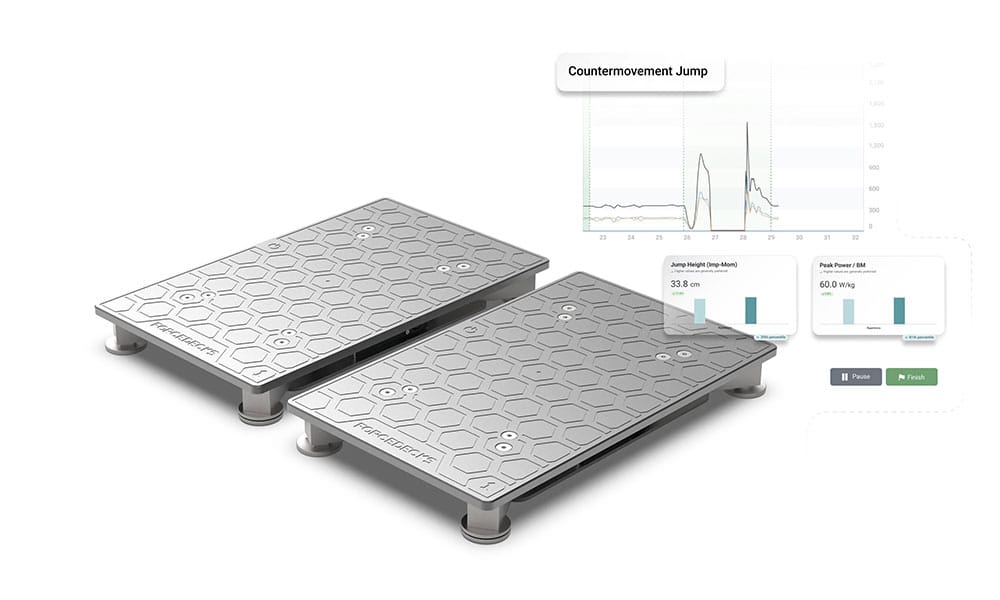
Force plates are specialized platforms that measure the force your body applies to the ground during movement. Using VALD ForceDecks dual force plate technology, physical therapists can analyze how much force you generate, how quickly you produce it, how evenly you distribute your weight, and how you maintain balance.
Unlike traditional assessments that rely primarily on observation or simple measurements, force plates provide objective data about movement patterns and physical performance.
This information helps our therapists better understand your current abilities, identify areas for improvement, and track changes throughout your rehabilitation or performance program.
What Can Force Plate Testing Measure?
ForceDecks technology measures several physical qualities that can help guide rehabilitation and performance training.
Strength & Force Production
Measure how much force your muscles generate during static and dynamic movements. Testing can help identify strength differences between limbs and track improvements over time.
Limb Symmetry & Weight Distribution
Identify differences in how much force each leg produces or how weight is distributed between limbs. These measurements can help therapists assess how an injured or recovering limb is being used.
Power & Explosiveness
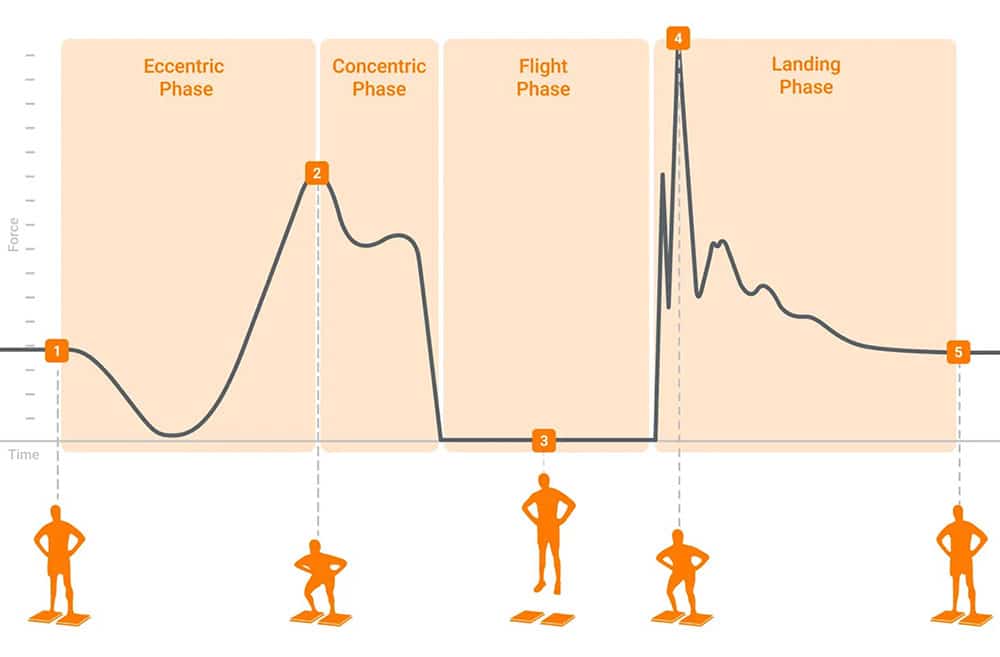
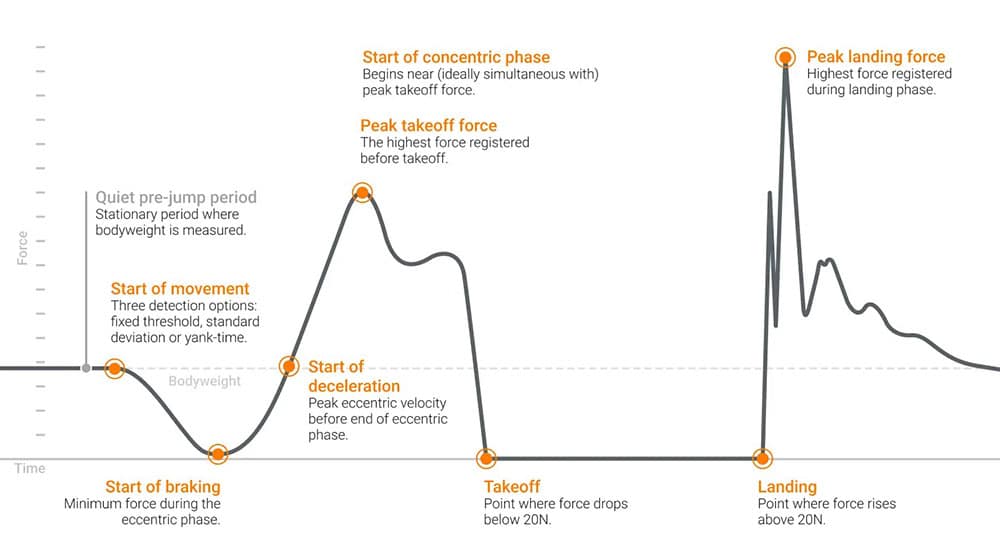
Evaluate how quickly you produce force during movements such as jumping. Metrics like peak power and jump height provide insight into lower-body performance.
Rate of Force Development
Measure how quickly you can generate force. This can help therapists assess explosive strength and monitor progress during rehabilitation and athletic training.
Balance & Stability
Assess how you distribute your weight and maintain stability during standing and single-leg balance tasks. These measurements can provide insight into balance control and movement strategies.

Force Plate
Assessments
at C4 Sports Therapy
ForceDecks can analyze a variety of movements and physical assessments. Your coach selects tests based on your injury, goals, and stage of rehabilitation.
Jump assessments provide insight into lower-body strength, power, and how each limb contributes to movement.
Common tests include:
- Countermovement Jump (CMJ): Measures jump height, force production, and movement characteristics during a jump.
- Single-Leg Jump: Evaluates each leg independently to identify differences in force production and jumping ability.
- Drop Jump: Assesses reactive strength and how quickly you can transition from landing to jumping again.
- Single-Leg Land and Hold: Evaluates your ability to absorb force and stabilize after landing on one leg.
- Hop Testing: Measures repeated hopping ability and provides insight into lower-limb performance.
These assessments can be particularly useful during later stages of rehabilitation when preparing to return to running, jumping, or sports.
Isometric strength assessments measure force production while a muscle or muscle group works without changing length.
Common assessments include:
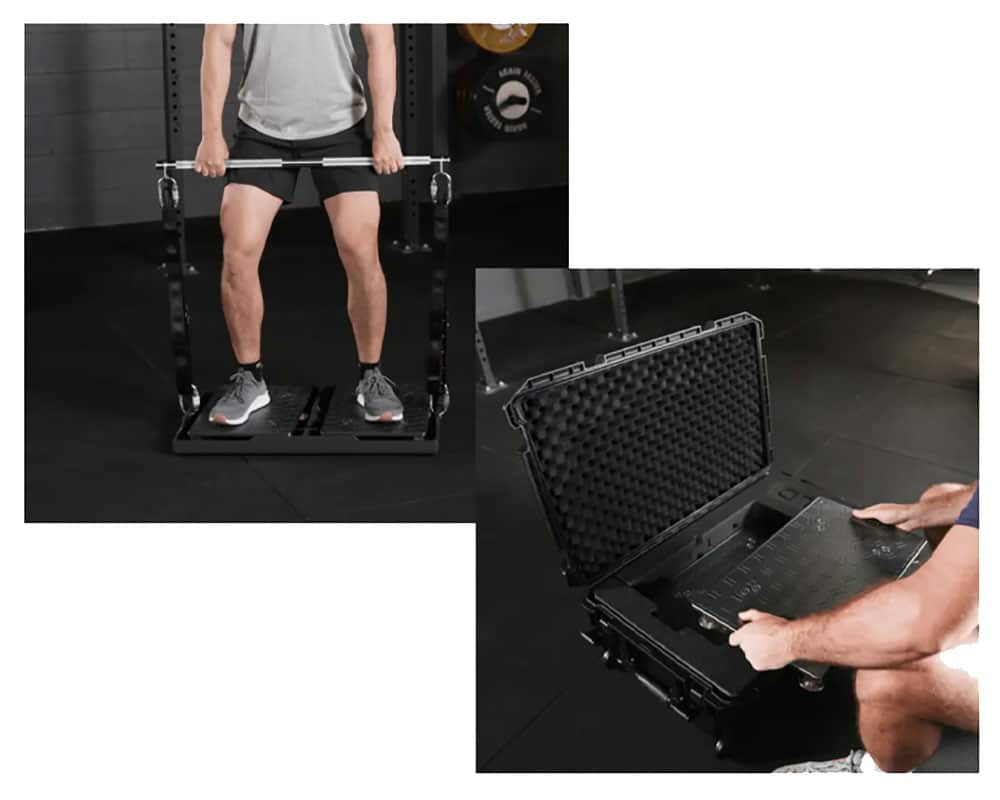
- Isometric Mid-Thigh Pull (IMTP): Measures maximal force production and how quickly force is generated.
- Isometric Squat: Evaluates lower-body strength through a static squat position.
- Single-Leg Isometric Testing: Measures force production in each leg to identify strength differences.
- Isometric Calf Strength Testing: Assesses calf force production and the ability to generate force quickly.
These tests can help therapists monitor strength development and identify areas that may need additional attention.
Force plates can measure how your body produces and distributes force during everyday movements.
Common assessments include:
- Squat Assessment: Measures force, power, movement depth, and differences between limbs during a squat.
- Single-Leg Squat: Evaluates single-leg strength and identifies differences between sides.
- Sit-to-Stand Testing: Measures force production, movement timing, and weight distribution during the transition from sitting to standing.
- Push-Up Assessment: Evaluates upper-body force production and differences in how each arm contributes to the movement.
These tests can help therapists evaluate functional strength and monitor improvements in movement quality and physical capacity.
Balance assessments help evaluate how well you maintain stability while standing or supporting your body on one leg.
Common tests include:
- Quiet Stand: Measures weight distribution and balance while standing still.
- Single-Leg Stand: Evaluates balance and stability while standing on one leg.
- Single-Leg Range of Stability: Assesses the ability to control and maintain stability during a balance task.
These assessments can be useful for patients working to improve stability, mobility, and confidence during everyday activities.
Following an injury or surgery, force plate testing can help evaluate strength, weight-bearing tolerance, balance, and differences between limbs.
Assessments may be used to monitor recovery following:
- ACL reconstruction and other knee injuries
- Ankle sprains and lower-extremity injuries
- Shoulder injuries and upper-extremity weakness
- Total knee replacement
- Total hip replacement
- Muscle and tendon injuries
Testing results help therapists identify areas of improvement and guide rehabilitation decisions alongside clinical examinations and other assessments.
Returning to sports requires more than simply feeling better. Athletes need to rebuild strength, power, stability, and the ability to tolerate sport-specific movements.
Force plate testing can help assess jumping ability, force production, landing stability, and differences between limbs as athletes progress through rehabilitation.
These measurements provide additional information to help therapists evaluate readiness for more demanding activities and return-to-sport milestones.
Force plate data is one part of return-to-sport decision-making. Therapists interpret results alongside clinical judgment, symptoms, sport-specific demands, and other assessments rather than using a single metric as the only measure of readiness.
Force plate assessments can also be used to establish performance benchmarks and monitor changes in strength, power, and explosive movement.
Athletes can use this information to better understand their physical capabilities and help guide training programs designed to improve performance.
Force plate results can also help coaches and therapists individualize training. Two athletes may achieve the same jump height while using different movement strategies or producing force in different ways. Looking beyond the final result can help identify whether an athlete may benefit from work focused on maximal strength, explosive power, braking ability, reactive strength, or landing control.
Repeated testing can help track how an athlete responds to training and whether recovery is progressing as expected. Changes in force, power, movement time, braking ability, or movement strategy may provide useful context even when jump height stays the same. Results should be considered alongside athlete feedback, soreness, sleep, training workload, pain, and coach or therapist observations.
Force plate testing is not limited to athletes. It can also help assess physical function in patients working to improve balance, strength, and mobility.
Assessments such as sit-to-stand testing, static balance, and isometric strength testing can provide insight into physical changes that may not be fully captured by traditional repetition-based assessments alone.
How Force Plate Testing Supports Rehabilitation
Force plate testing can be incorporated throughout the rehabilitation process to help therapists assess physical function and monitor progress as patients work toward their goals.
Track Your Progress With Objective Data
One of the key benefits of force plate testing is the ability to compare results over time.
By repeating assessments throughout rehabilitation or training, therapists can track changes in force production, strength, power, balance, and limb symmetry.
This information can help patients better understand their progress, recognize areas of improvement, and stay engaged in their recovery.
Force plate testing is used alongside clinical judgment, physical examinations, and other assessments. Results are interpreted in the context of each patient’s individual goals, condition, and functional needs.
Put Results in Context
A single score does not tell the whole story. Results are most useful when compared with an individual’s previous testing, baseline data when available, goals, activity demands, and other strength and movement assessments. Side-to-side symmetry alone does not confirm full recovery, since both limbs may be below an athlete’s previous performance level.
Testing conditions and technique should be kept as consistent as possible because warm-up, recent training, time of day, motivation, pain, soreness, and familiarity with the test can affect results. Performance may also temporarily decline during demanding training periods. Trends across multiple tests are generally more informative than one isolated result.

Experience Advanced Sports Therapy at C4
At C4 Sports Therapy, we combine individualized physical therapy with advanced assessment tools to help patients move better, rebuild strength, and work toward their goals.
Whether you’re recovering from an injury, preparing to return to sports, or looking to improve your physical performance, our team can help develop a treatment plan tailored to your needs.
Ready to get started?
Contact C4 Sports Therapy to learn more about our physical therapy services and how force plate testing may support your recovery or performance goals.
Call Center for Sports Medicine & Orthopaedics at (423) 624-2696 to schedule an appointment.